AISI 1020 is a low-carbon steel containing approximately 0.20% carbon, 0.30–0.60% manganese, and minor residuals. It is one of the most widely used grades for welded components because of its excellent weldability, affordability, and balanced mechanical properties. For fabrication shops, engineering prototypes, and production welding, AISI 1020 offers distinct advantages over higher-carbon or alloy steels.
Exceptional Weldability. The low carbon equivalent (CE ~0.30%) means AISI 1020 has very low susceptibility to hydrogen-induced cracking and cold cracking. In most thicknesses up to 1/2 inch, no preheating is required before welding. Preheating becomes necessary only when the material is below freezing or when thickness exceeds 1 inch. Post-weld heat treatment (stress relieving) is generally optional. This simplicity saves time and reduces consumable costs. Common welding processes—SMAW (stick), GMAW (MIG), GTAW (TIG), FCAW, and SAW—all work well with standard filler metals like ER70S-6 (MIG/TIG) or E7018 (stick). Weld metal deposits exhibit good strength matching because the filler metal’s tensile strength (~70 ksi) exceeds the base metal’s (~55 ksi tensile, 30 ksi yield).
Good Mechanical Properties for General Fabrication. AISI 1020 provides adequate strength for most structural and mechanical applications. In the hot-rolled condition, yield strength is about 30 ksi (207 MPa), tensile strength 55 ksi (379 MPa), and elongation 20–25% in 2 inches. These properties allow the material to absorb impact energy and deform before fracture. For components subject to moderate loads—such as machine bases, brackets, shafts (non-critical), and fabricated frames—1020 is more than sufficient. If higher strength is needed, cold-drawing or cold-rolling can increase yield to 50 ksi, though ductility decreases.
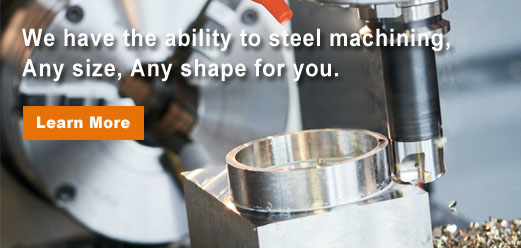
Machinability and Formability. Before or after welding, AISI 1020 machines well with high-speed steel or carbide tools. Surface finishes are good, and chip formation is manageable. For forming operations, the steel can be bent, rolled, stamped, or sheared without cracking. This makes it ideal for welded assemblies that require punching, drilling, or bending prior to assembly.
Economic Advantages. AISI 1020 is among the least expensive carbon steels, costing significantly less than alloy steels or stainless grades. Weld consumables are also low-cost. Because no special heat treatment or costly shielding gases (beyond standard C25) are required, total fabrication cost remains low. Additionally, any welding defects can easily be repaired by grinding and re-welding without risk of cracking.
Limitations and Best Practices. While AISI 1020 lacks corrosion resistance (needs painting or coating), it is not suitable for high-temperature service above 600°F or cryogenic applications. For welding, always remove mill scale and oil to prevent porosity. Use pure argon or argon/CO₂ mixes. For thicker sections, consider preheating to 150°F to reduce residual stress. In summary, for cost-effective, reliable welded components, AISI 1020 remains an industry benchmark.

Just like you, 70% customers choose long-term cooperation with BBN steel not only for our good product and service quality, good reputation in the international market, but also for our experienced one-stop raw material supply and further steel processing!